

Naomi Kanakia has a new book out called What’s So Great About the Great Books. I’m a huge fan of Naomi’s newsletter, Woman of Letters. I love her way of writing about books and writing and the literary scene. So I knew I would want to read her new book and that I’d enjoy spending time in her company. And I did!1
What’s So Great About the Great Books is a defence of (and argument for) reading the ‘Great Books.’ Naomi writes that her book has two audiences:
Yes, it’s addressed primarily to people who are somewhat interested in the Great Books but wonder whether a deeper investigation is truly worth their time. However, this book is also addressed to people who already love the Great Books and are perusing my book because they enjoy works in its genre: apologias for the classics.
I haven’t really read an apologia for the classics before this one, but I would put myself in the second camp. I’m already sold on reading the Great Books. In fact, my problem tends to run the other way – I have difficulty settling down to reading contemporary fiction being so very captivated by the literary past.
I’ve seen a whole lot of reviews of Naomi’s book doing the rounds – the one I enjoyed the most was this one by Henry Begler.2 I also enjoyed some of the interviews Naomi has done, including this one with Isaac Kolding and this one with Jared Henderson. Definitely read or watch those if you’re interested in knowing more about Naomi and her book. Or read on for a few of my own undercooked thoughts…
A defence of lay reading
Naomi says that her book is in part a defence of lay reading. She writes:
Over time I taught myself how to read the Great Books. I didn’t need professors. I didn’t need a lot of external guidance. I read these books the same way I read everything else: I sank into the dream of the text, experiencing it with as much immediacy as I could. … Some things I understood well, others I understood poorly, and some things I understood not at all. And that, too, was ok.
This has been my experience as well. And it’s this self-directed ‘lay reading’ that has brought immeasurable richness into my life. And although we can go to university and receive formal instruction, most of us will only learn by doing – we will only learn how to read the classics by reading the classics in the way Naomi describes – experiencing the text with immediacy and without much external guidance.
One of the first classic novels I read was Jane Eyre by Charlotte Bronte. My family had a rather impressive edition with tissue thin pages, a sewn in ribbon bookmark, and a claret-coloured imitation leather cover with gold embossed lettering. We had plenty of books on the shelf but none that looked like that. I recall even from a young age understanding that there was something special about this book (it had a sewn in bookmark for a start!). I also recall not knowing enough to know whether it was Jane Eyre by Charlotte Brontë or Charlotte Brontë by Jane Eyre. Nothing in the presentation of the book, its title page, or page headers, clarified the matter. I knew of ‘Jane Austen’ so was leaning towards ‘Jane Eyre’ being the author. At thirteen, I decided it was time for a precocious young scholar such as myself to tackle this book. I began. Aha, I thought. It’s Charlotte Brontë by Jane Eyre. I read on… and on and on. And then came to the end of… the Introduction – a short biographical sketch of the author, Charlotte Brontë. It had taken hours to read that far and, finally, disconsolately, I turned to… Chapter One.
But this is how you learn to read the classics. You sit in a chair, open the cover and have a go. And strangely, as you read, amid hours of confusion and lack of comprehension, something begins to coalesce – some burgeoning understanding, some growing receptivity – that eventually permits contact with other minds across time.
Sometimes, reading the Great Books is hard work. But, to Naomi’s way of thinking: ‘that work is worth doing because the Great Books offer more than immediate pleasure; they also offer enduring value—something that stays with us even after the pleasure has passed.’
Have people always read the Great Books?
We don’t really call them the ‘Great Books’ in Australia (at least, I don’t think we do!) – here we would just say ‘the classics.’ But one thing I found out from reading this book was that this belief in the value of pursuing a reading program of the classics was largely a social construct – a fad that arose in the twentieth century.3
Perhaps you imagine that universities in English-speaking countries have always taught the English canon (at least since an English canon began to form) but they haven’t. Studying the canon, even in a university setting, is relatively new. Up until the mid-nineteenth century, universities in the English-speaking world concerned themselves with works in Latin and Greek. Hardly any works in English were taught and no works of French or Continental philosophy were taught. Most of what we would consider the ‘Great Books’ were ignored. ‘Grammar Schools’ (in Australia, these are usually posh, private schools), literally taught grammar – Latin and Greek grammar – to prepare students for entrance to university. They didn’t teach Shakespeare or Milton. Those were things, Naomi writes, that you maybe read on your own!
What’s So Great About the Great Books traces the fascinating history that resulted in English translations of Latin and Greek texts eventually being taught (this was extremely controversial at the time!) and a Great Books movement focused on lay readers gradually gathering momentum with the publication of various ‘Great Books’ collections in the first half of the twentieth century.
But that movement has foundered. In our time, the Great Books have somewhat fallen out of favour with the Left due to being considered egregiously undiverse and written predominantly by dead white guys. At the same time (as if to underline their dubiousness to the Left), they have been increasingly embraced by the Right.
I think, for a lot of us who are outside academia or who have not much proximity to the Culture War type debates being waged on the internet – this politicisation of the Great Books is difficult to understand. We have read and loved Austen! We have been moved by the novels of George Eliot! We have been surprised by the rambunctious humour of Chaucer and the timeless acuity of Shakespeare. We have been captivated by the poetic vision of Milton or the detailed eye of Proust or the innovations of the Modernists or the relentless searing vision of the nineteenth century Russians. The relationships we have with these writers feels personal.
I suppose it might lead those of us who revel in these books to feel defensive. Why wouldn’t we! There is a feeling of indignation at having something we value dismissed out of hand with little more than a sanctimonious ‘too white’, or ‘too male’, or ‘dodgy politics.’ Then there is the secondary horrifying prospect that our enjoyment of those books is indicative of something deeply suspect in our own politics!
Naomi takes seriously those concerns and criticisms of the Great Books and works through them one by one. Each chapter responds to a question, such as: Aren’t the Great Books kinda problematic?’ and ‘Why not read other books that are equally beautiful but have better politics?’ and ‘Can’t reading the Great Books be psychologically damaging for marginalised people?’ I found those chapters fascinating partly because Naomi doesn’t allow herself any pat answers. She tackles those questions seriously and empathetically. I don’t have time to recreate Naomi’s arguments here, but I appreciated her working through and addressing those concerns about the ‘Great Books’ and the ‘Western Canon’ – concerns I am alive to but have struggled to assimilate into my overarching feeling that reading those books is still a worthwhile enterprise.
Which books, which list?
Inevitably, the next question must be: ok, but which books are the ‘Great Books’? Which list should we follow?
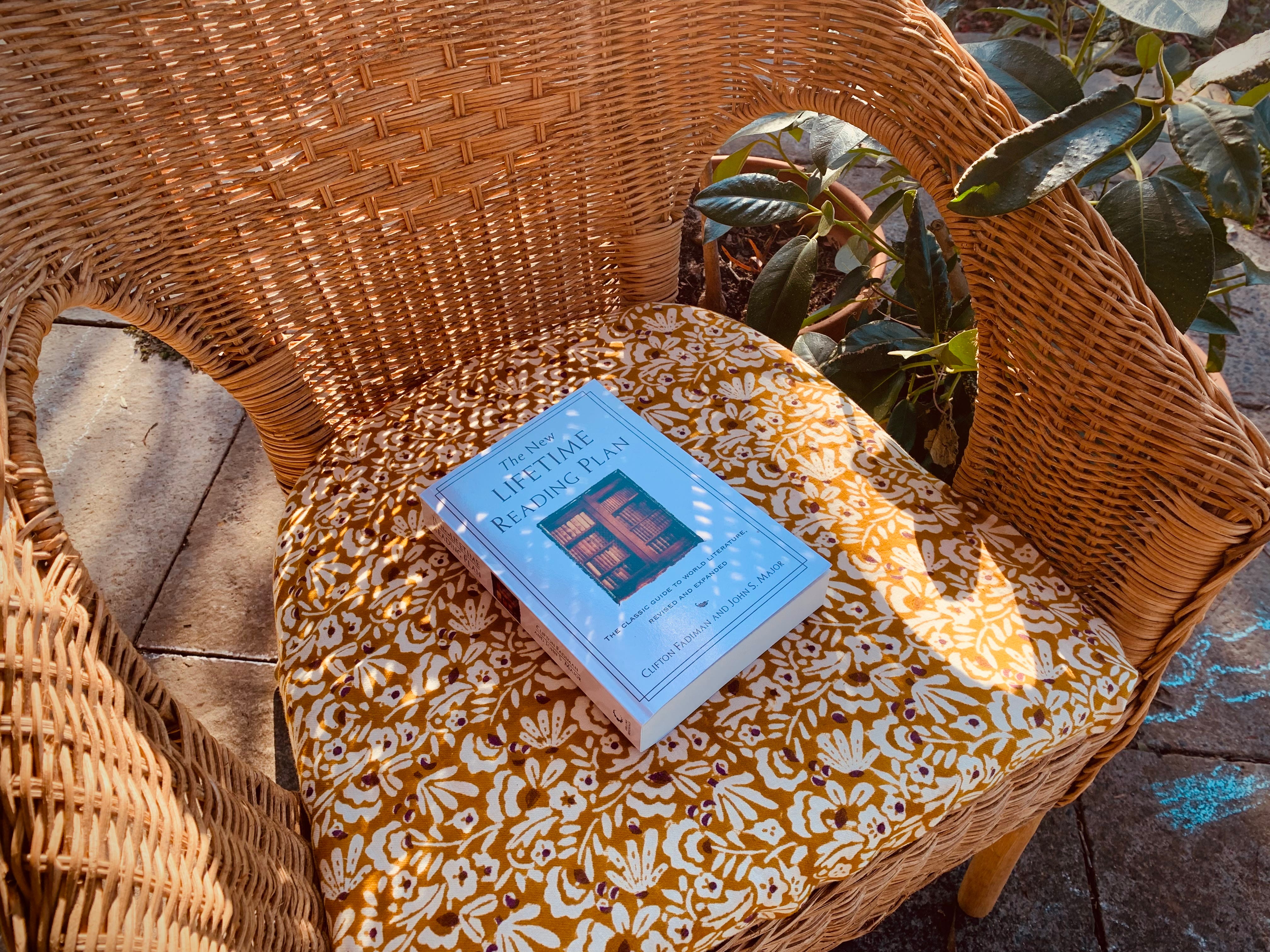
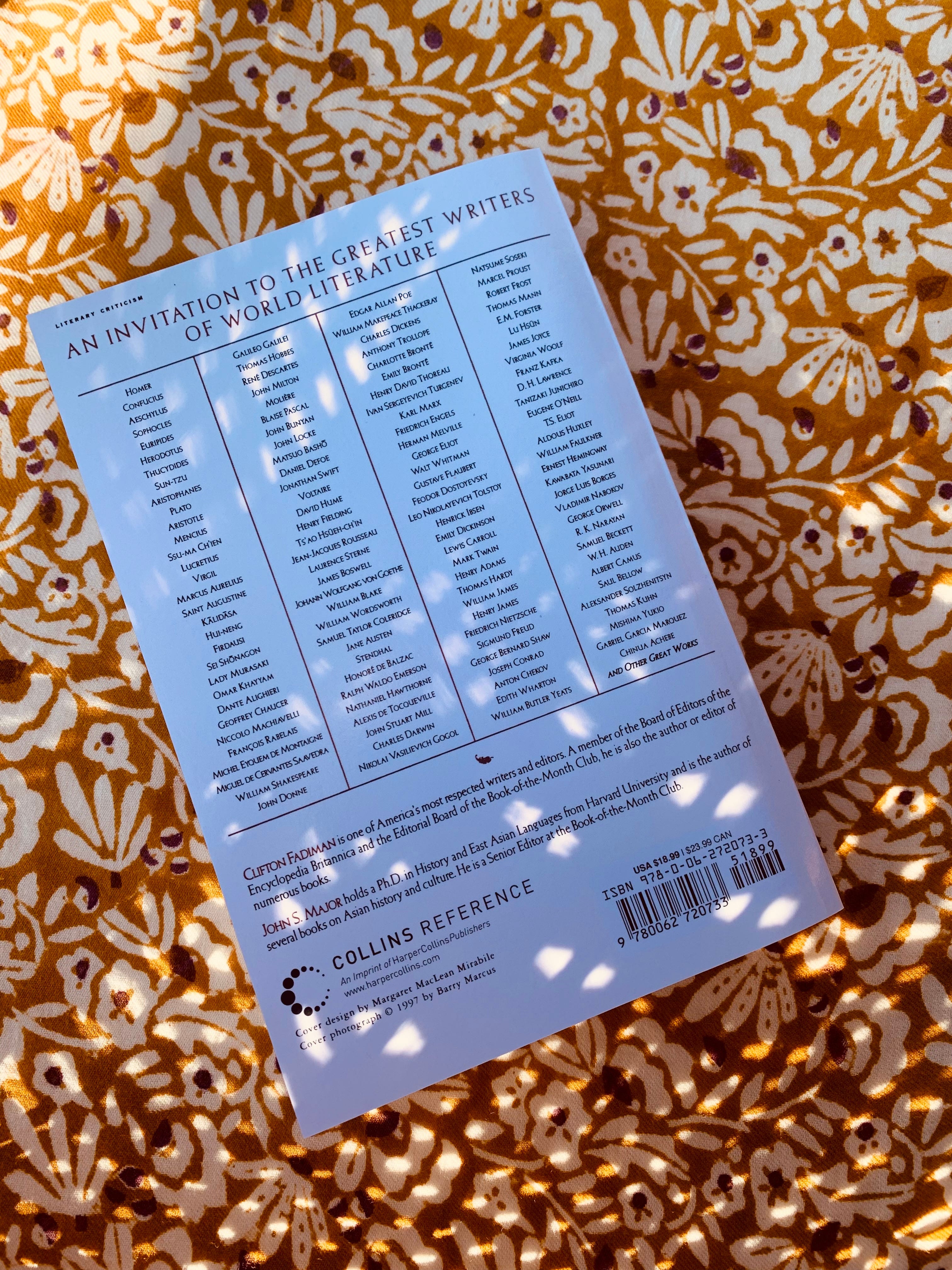
Naomi follows the reading list contained in the The New Lifetime Reading Plan, originally written by Clifton Fadiman in 1960 and revised by John S Major in 1997. But there are plenty of lists to choose from such as this one from St John’s College and the Core Curriculum offered by Columbia (and many others besides).
All of these lists are very white and very male. And many of the books contain racist or sexist or homophobic or otherwise unenlightened views. So, I suppose one might then ask Naomi: why not curate your own list? Naomi has opted not to do that and has gone so far as to include the Fadiman-Major list in the endnotes of her book. She writes that she didn’t feel qualified to create her own list. She goes on:
The Great Books concept is about placing faith in those who came before us. Yes, there are many methods of constructing a Great Books list, but they all rely on trusting other people’s judgement. […] There is, in my opinion, some collective wisdom contained in these lists, and yes, you can definitely fiddle around with any of them and add and subtract things, but I think this wisdom is worth respecting.
I admire Naomi’s humility on this point because I imagine that there might’ve been an awful lot of pressure to develop a more palatable list that addresses the obvious lack of diversity of the writers represented in the list.
The obvious point to make (one that Naomi makes in her book) is that you shouldn’t just read the Great Books. It is open to us to read widely and voraciously and follow our interests. But on that point of the lack of diversity of Great Books writers, Naomi introduces the idea that the Great Books contain another form of diversity: They teach us about other times. They teach us about cultures from far in the past.
The reading of books written a long time ago has always appealed to me. I know that a lot of people aren’t quite so interested in this, that it might just be a quirk of certain personality types (mine) to want to immerse themselves in the past and understand what life was like then and how people thought. Inevitably, old books contain what we might consider to be outdated ideas, but they also contain their own wisdom and exposure to them broadens our perspectives and denaturalises our assumptions. The idea that we should confine ourselves to books that are morally ‘pure’ sounds both sterile and arrogant to me – arrogant because there is a built-in assumption that we have reached some sort of moral pinnacle that allows us to stand outside time and judge those poor idiots that dared to write books before us, while imagining that we will never be judged by those who come after.
In any case, Naomi believes that it is the moral complexity of the Great Books that makes them great. ‘My contention,’ writes Naomi, ‘is that if the politics are unimpeachably good, then the book simply cannot be beautiful.’
Moral complexity and aesthetic beauty are, to my mind, inextricably intertwined—and moral complexity is so important that it doesn’t really matter what message the author was trying to convey, or where they personally stood, because their genius often brings out the full contours of the situation that reveals itself when the book is read as a whole.’
The Great Books have integrity
Early on in her book Naomi writes that the thing that tends to distinguish the Great Books is that they have a lot of integrity. She takes up this idea of ‘integrity’ in a later chapter (and I’ll leave you with this quote):
For me, the Great Books are marked by their courage: They engage with moral, ethical, political, and spiritual questions on the deepest and most rigorous level. And whatever answer the author produces, you often see within them the ghosts of other answers. This aligns with the argument “The Great Books teach you how to think,” but it’s not quite that simple either. I think my position is more like “The Great Books teach you how to have integrity.” To have integrity means recognising that the bad and the good are often inextricable and that what we like or praise about a situation is often a direct result of the parts of it that we most loathe.
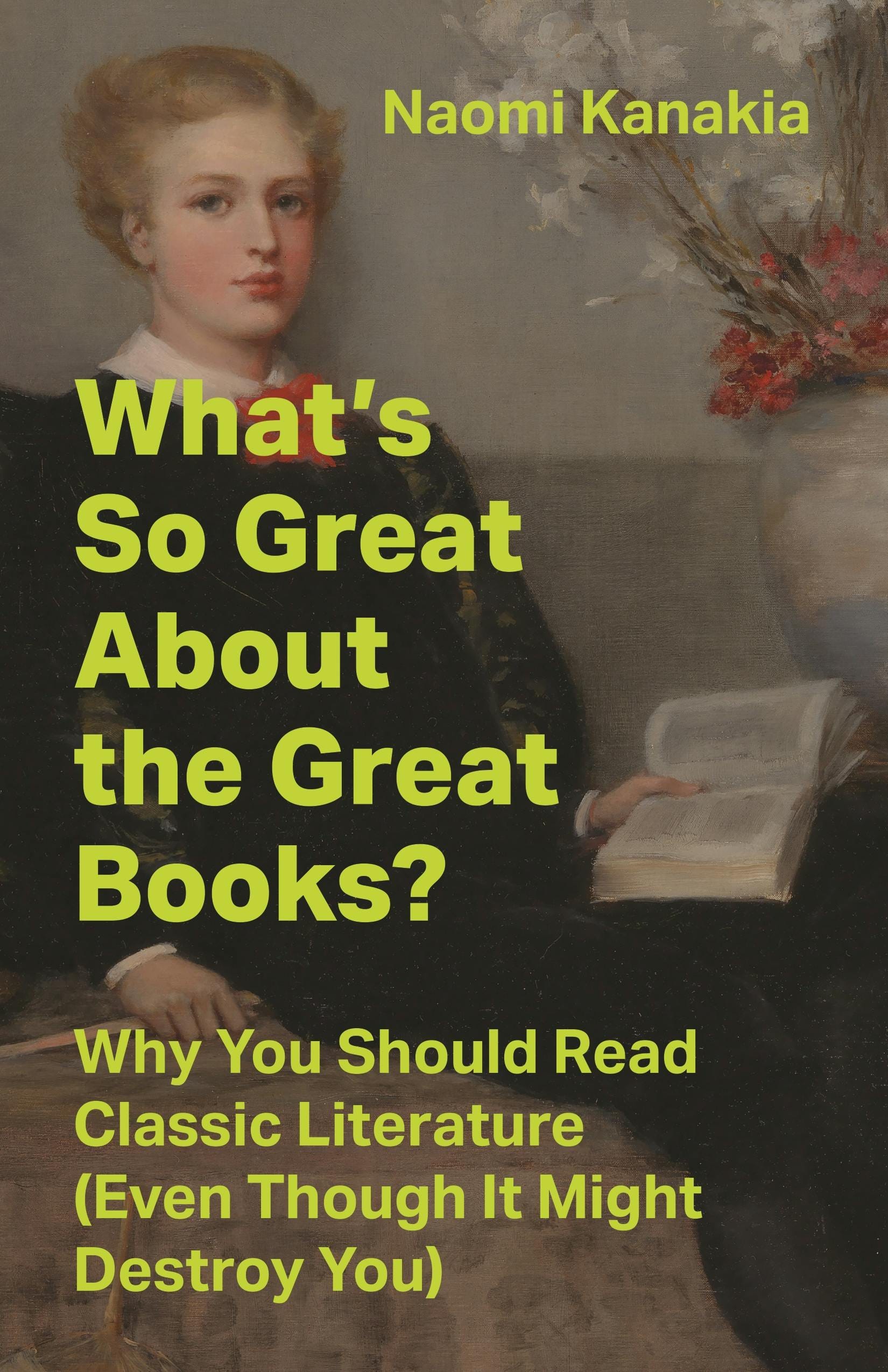
I was grateful to receive an advance review copy of What’s So Great About the Great Books.
Though if you only have time to read one thing by Henry, read his piece on Janet Malcolm.
My thirteen-year-old self finds this difficult to believe. My desire to read the classics felt completely natural and unconditioned!
Thank you for sharing this book. I will be checking it out as soon as I'm caught up on some other reading.
I love the way you break down your review into sections; they show the complexity of Kanakia's book. Just for fun I checked how many I've read on the Fadiman-Major list, so I do indeed like reading the classics. Thanks for recommending her book. Looking forward to reading it. In particular, I'd like to know more about her take on integrity.